-
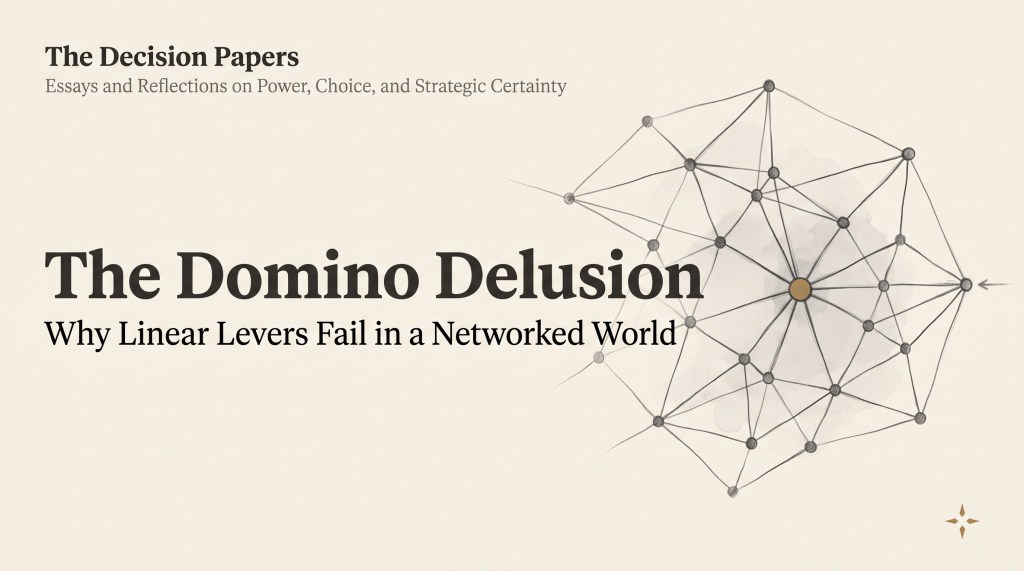
I.31 — The Domino Delusion: Why Linear Levers Fail in a Networked World
“When we try to pick out anything by itself, we find it hitched to everything else in the universe.” — John Muir The plan is drawn as a clean line. Hire more sales reps, who make more calls, which generate more leads, which close more deals. Each arrow points forward, the logic feels like engineering,…
-
I.30 — Evidence Infrastructure: How Institutions Stop Falling in Love With Bad Arrows
“It is the peculiar and perpetual error of the human understanding to be more moved and excited by affirmatives than by negatives.” — Francis Bacon A room is about to approve a new initiative, and one person in the corner feels a cold flicker of recognition. We tried almost exactly this two years ago, she…
-
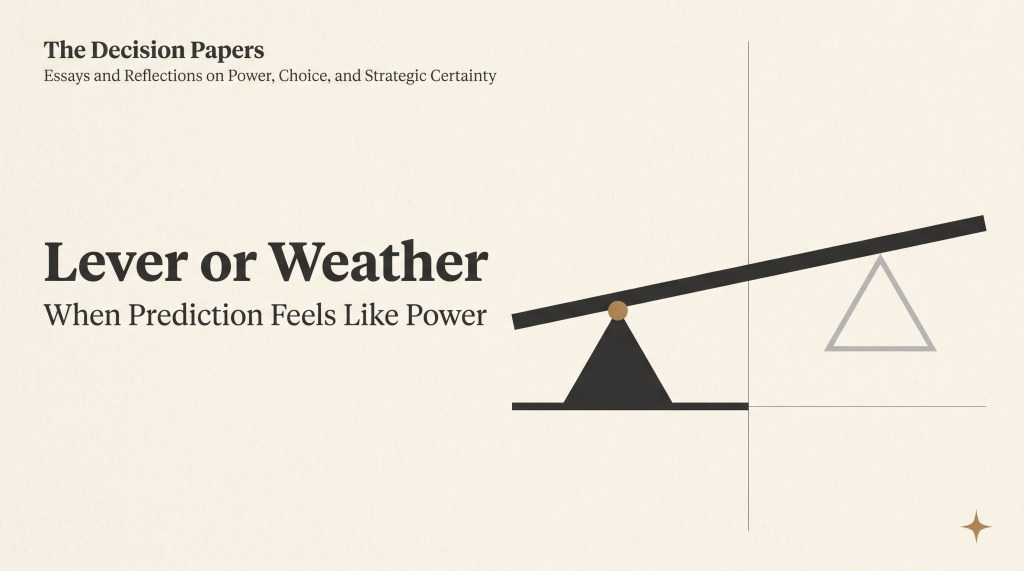
I.29 — Lever or Weather: When Prediction Feels Like Power
“It is far better to foresee even without certainty than not to foresee at all.” — Henri Poincaré Two companies get the same warning from the same kind of model: a sharp drop in demand is coming, six months out, and the forecast is solid. In the first boardroom, the question is how do we…
-
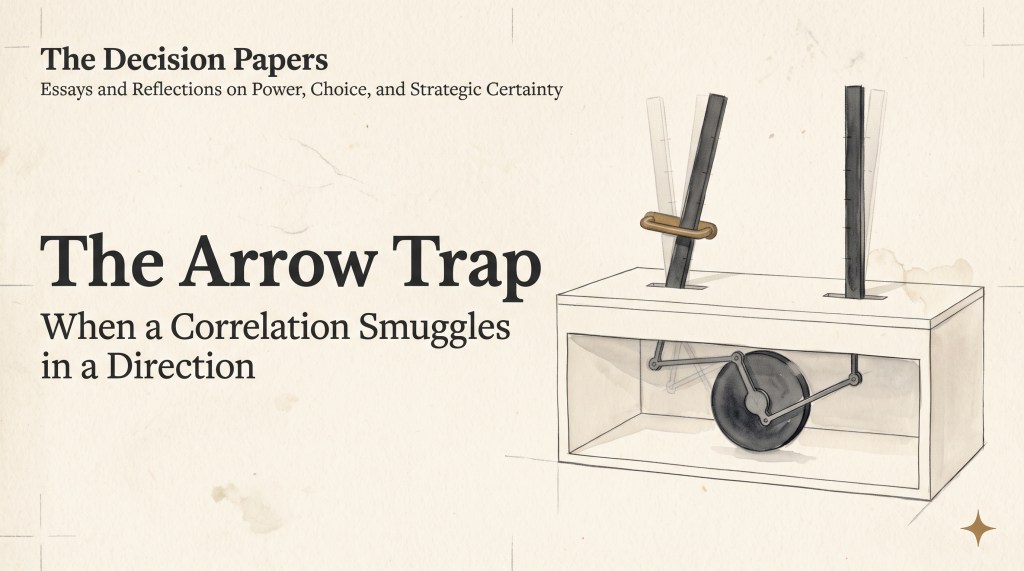
I.28 — The Arrow Trap: When a Correlation Smuggles in a Direction
“They seem conjoined, but never connected.” — David Hume The room thinks it has found the lever. Two lines on the dashboard have moved together for months with uncanny discipline: X rises, Y rises, again and again. Someone says what everyone is already thinking. So if we push down on X, Y comes down with…
-
I.27 — Causality Without Certainty: Why the Arrow Is a Verdict, Not a Theorem
“It is the mark of an educated mind to rest satisfied with the degree of precision which the nature of the subject admits.” — Aristotle A leader cuts the price on the flagship product, and over the next quarter revenue climbs. At the review, the story writes itself: the price cut worked. But pause on…
-
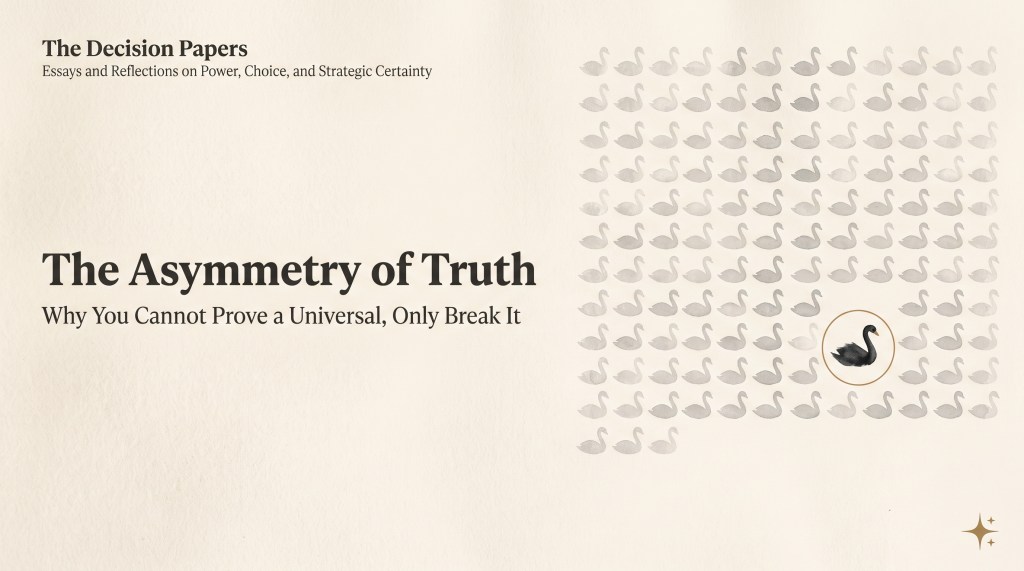
I.26 — The Asymmetry of Truth: Why You Cannot Prove a Universal, Only Break It
“No man ever steps in the same river twice.” — Heraclitus For most of European history, all swans are white was not a theory. It was a fact, confirmed by every swan anyone had ever seen, for centuries. Then, in 1697, a Dutch expedition reached the rivers of Western Australia and watched a black swan…
-
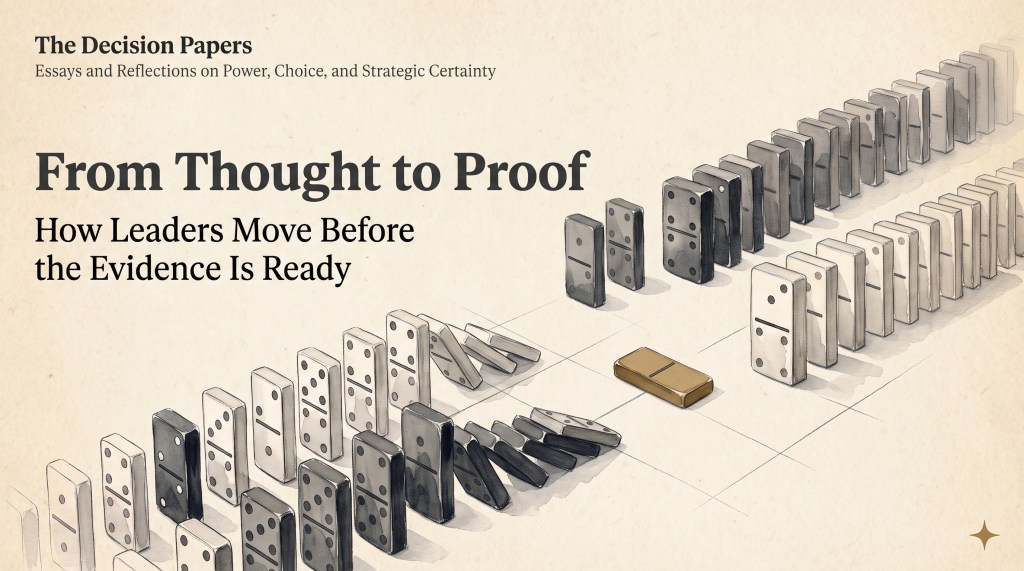
I.25 — From Thought to Proof: How Leaders Move Before the Evidence Is Ready
“Hypotheses are nets: only he who casts will catch.” — Novalis In 1854, a London doctor asked a parish council to do something that sounded like superstition: take the handle off the Broad Street water pump. Cholera was killing the neighbourhood, and everyone knew it came from bad air. Germ theory was unproven. The bacterium…
-
I.24 — Science Is Not an Oracle: What Science Is, and Is Not, as an Input to Decision
“Sit down before fact as a little child, and be prepared to give up every preconceived notion.” — Thomas Henry Huxley Someone says the science says, and the room goes quiet. The phrase lands like a gavel. The debate that was live a second ago is over, because who argues with science? And that reflex,…
-
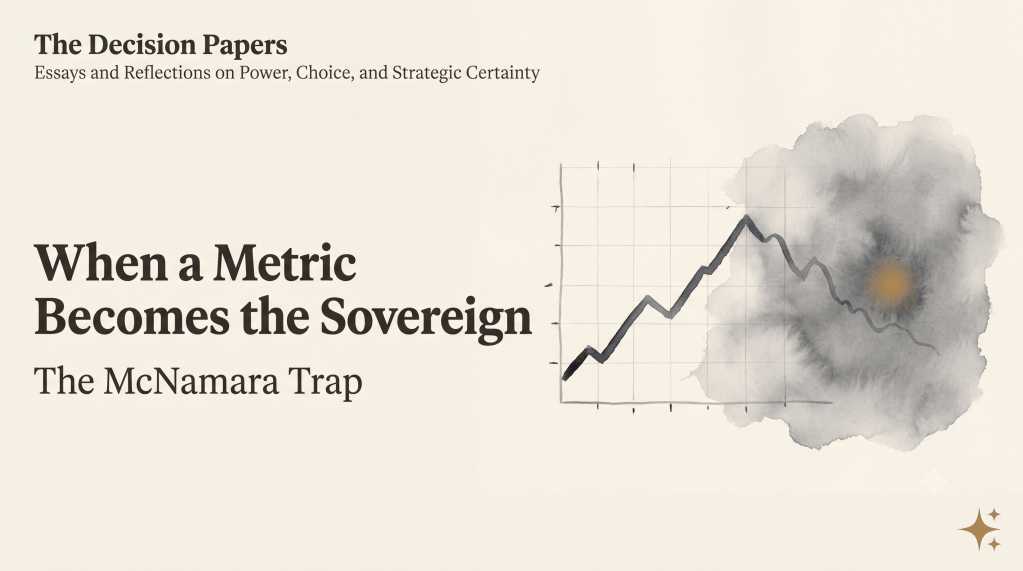
I.23 — When a Metric Becomes the Sovereign: The McNamara Trap
“A witty statesman said you might prove anything by figures.” — Thomas Carlyle Robert McNamara came to public decision-making with an ambition you should admire: to make enormous choices more disciplined by separating what leaders wished from what the evidence showed. His whole reputation was built on measurement, the rigour that let modern organisations scale…
-
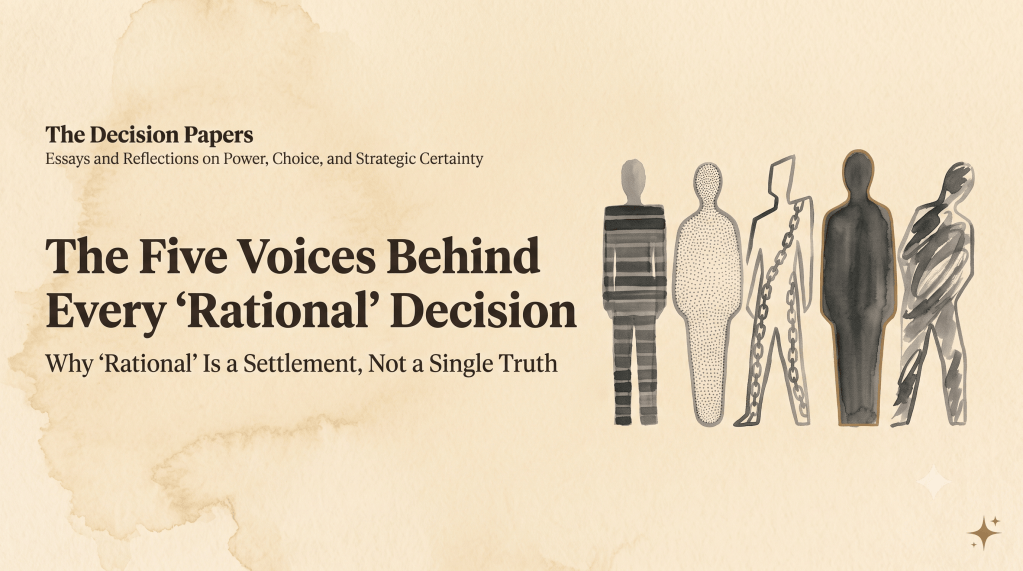
I.22 — The Five Voices Behind Every “Rational” Decision: Why “Rational” Is a Settlement, Not a Single Truth
“Nothing is easier than self-deceit. For what each man wishes, that he also believes to be true.” — Demosthenes You have sat in some version of this room, facing a decision big enough to outlive the people making it. Finance opens: the data is clear, a twenty percent efficiency gain; Operations answers that it is…
-
Subscribe
Subscribed
Have a WordPress.com account? Log in now.

