-
I.11 — The Ulysses Pact: When a Clear Mind Binds a Future One
“Bind me as I stand upright, with a bond so fast that I cannot possibly break away … and if I beg and pray you to set me free, then bind me more tightly still.” — Homer On his way home from war, Odysseus must pass the Sirens, whose song is so beautiful it overwhelms…
-
I.10 — Who Decided?: The Moral Ambiguity of the Split Self
“The human soul is like a charioteer who must drive two horses: one is noble and of noble breed, the other is quite the opposite. The driving of them is necessarily difficult.” — Plato, Phaedrus The most haunting question in executive leadership does not follow the disaster you saw coming. It follows the unforced error.…
-
I.9 — Tempo With Proof: Governing Speed So Motion Doesn’t Pretend to Be Correctness
“Festina lente.” (Make haste slowly.) — Attributed to Augustus Leaders never have perfect information, and waiting for it is its own decision, usually a losing one. You are paid to take risk in the gap between what you know and what you must do. But there is a difference between productive risk and the thing…
-
I.8 — Shaping the Narrative: Why Coherence Feels Like Truth (and Often Isn’t)
“For every complex problem there is an answer that is clear, simple, and wrong.” — H.L. Mencken A signal claiming the institution’s attention produces two pressures, and leaders rarely acknowledge the second. The first pressure is to explain what is happening. The second is to explain it in a form the room can live with,…
-
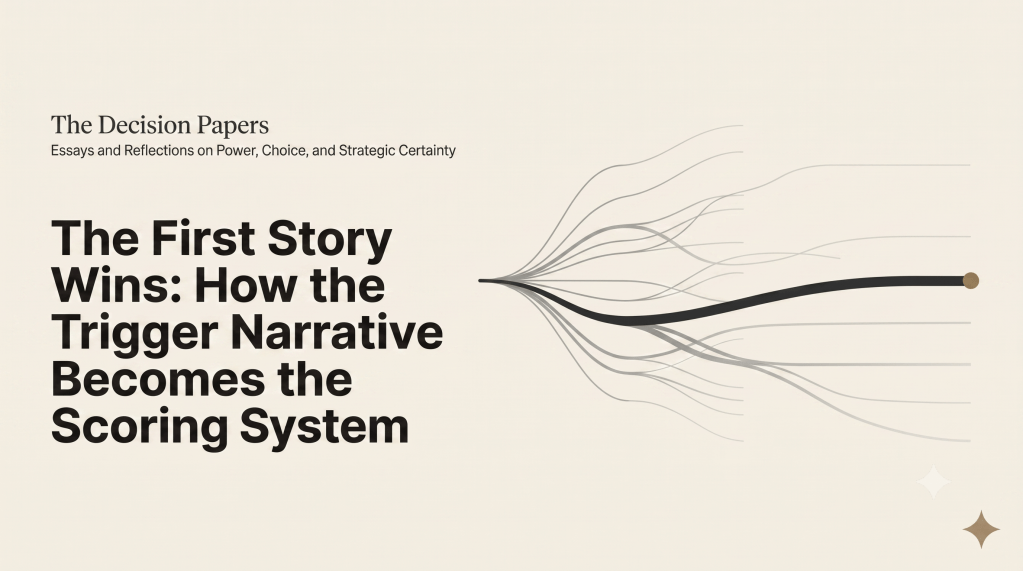
I.7 — The First Story Wins: How the Trigger Narrative Becomes the Scoring System
“We tell ourselves stories in order to live.” — Joan Didion In the first seconds after a signal claims the room’s attention, the leadership team faces an uncomfortable gap. The metric has spiked, the complaint has landed, the headline is moving, and no one yet knows what is happening on the ground, yet the pressure…
-
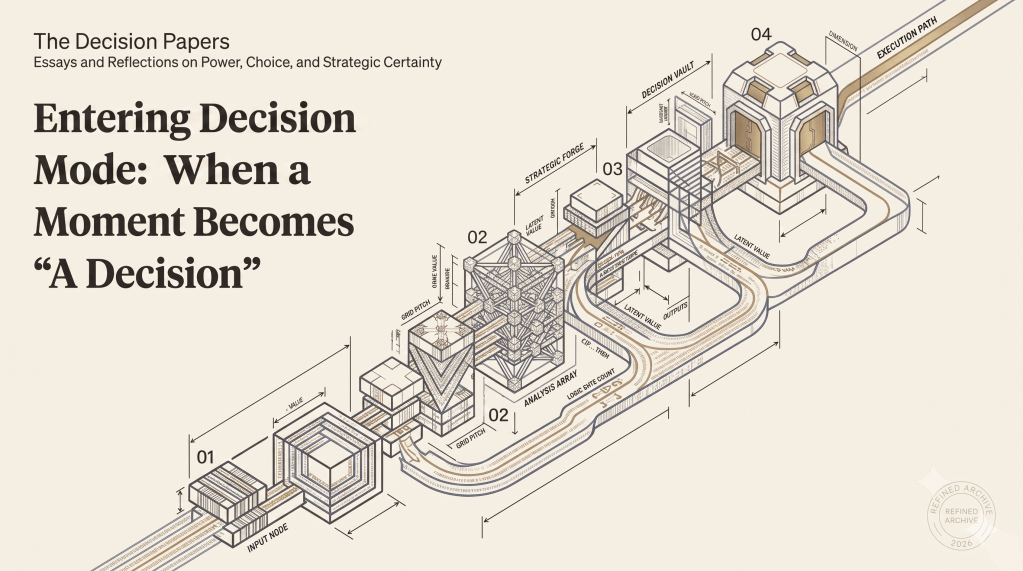
I.6 — Entering Decision Mode: When a Moment Becomes “A Decision”
“Above all, not too much zeal.” — Talleyrand Most leadership failures are not failures of strategy. They are failures of timing, the team entered decision mode too early, too late, or for the wrong reasons, and the rest unfolded from there. Organisations are not constantly making decisions, though they often feel as if they are.…
-
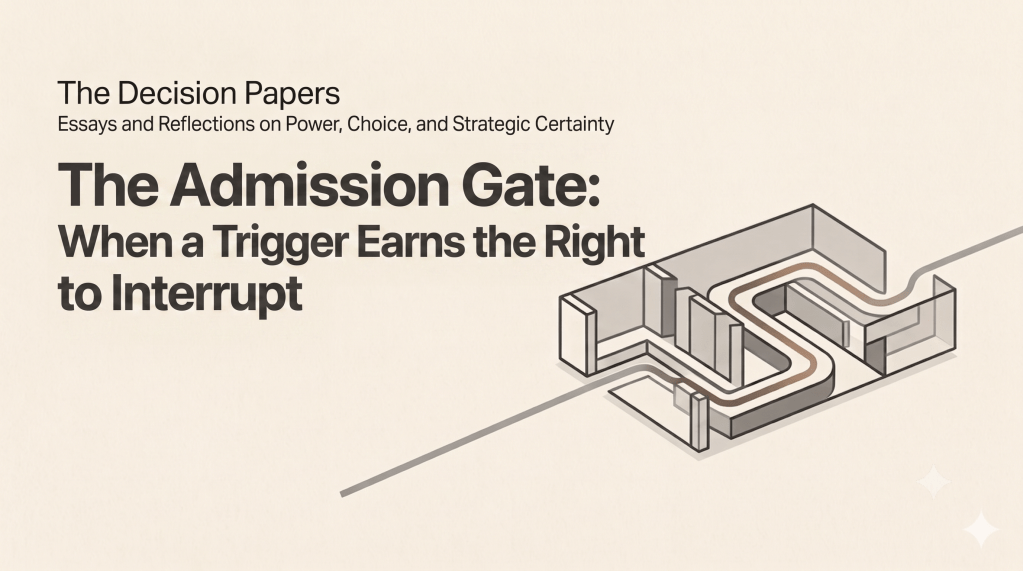
I.5 — The Admission Gate: When a Trigger Earns the Right to Interrupt
“I have made it a rule never to have my letters opened until three days after their receipt, and I find that by that time nine-tenths of the letters have answered themselves.” — Napoleon Bonaparte Most leaders think a decision begins when options appear. It begins earlier, the moment something claims the right to interrupt…
-
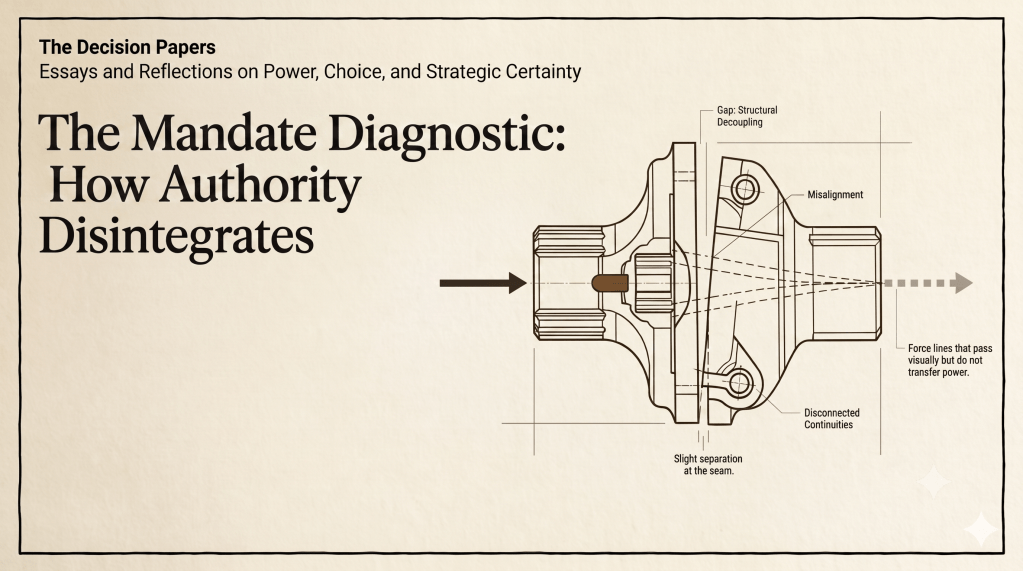
I.4 — The Mandate Diagnostic: How Authority Disintegrates
“The purpose of a system is what it does. There is no point in claiming that the purpose of a system is to do what it constantly fails to do.” — Stafford Beer Before you argue about strategy or data, audit the steering column. A decision is only as strong as the authority of the…
-
I.3 — Mandate Before Method: Who Has the Right to Steer?
“The safety of the people shall be the highest law.” — Cicero At 2:17 a.m. the system goes red, and the room is running on adrenaline. A downstream service is failing, the pager is screaming, and someone opens a terminal and finds a switch that appears to solve the problem in seconds. It is a…
-
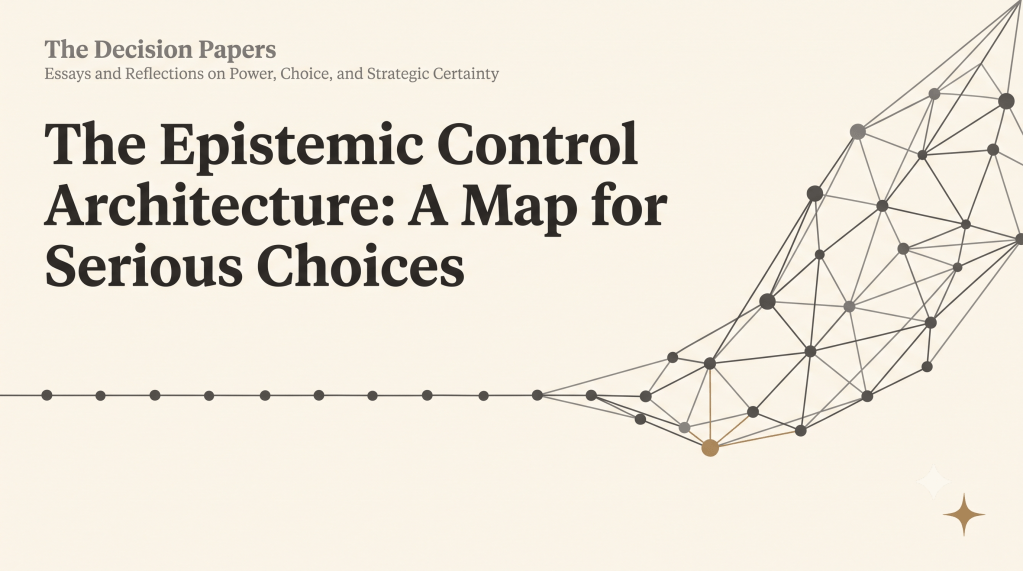
I.2 — The Epistemic Control Architecture: A Map for Serious Choices
“Nothing is stronger than habit.” — Ovid Most organisations do not fail at choosing because they lack intelligence. They fail because their knowing is disconnected from their steering. Choices move through an invisible pipeline. Who is allowed to steer. What gets escalated. What counts as proof. What is quietly forgotten. When that pipeline is implicit,…
-
Subscribe
Subscribed
Already have a WordPress.com account? Log in now.
 The Decision Papers