-

I.17 — The Question Is a Control Object: Design, Not Wording
“The mere formulation of a problem is far more often essential than its solution.” — Albert Einstein A question is not a sentence you ask. It is a designed object that determines what can be seen, what counts as proof, how fast you are allowed to move, and which trade-offs are even permitted. Most bad…
-

I.15 — Desire: The Force Beneath Utility
“Desire is the very essence of man.” — Baruch Spinoza, Ethics Picture a standard executive decision meeting. The table is covered in the artifacts of rationality: spreadsheets, risk matrices, projections. To an observer it looks like a laboratory, a group of neutral sensors receiving data and processing it into a logical output. To anyone who…
-

I.14 — Rational to Whom?: Utility, Values, and the Mirage of Objectivity
“There are no facts, only interpretations.” — Nietzsche In every high-stakes project there comes a moment of exasperation when a leader calls a colleague, client, or regulator “completely irrational.” The phrase offers a dangerous mix of frustration and comfort. It performs a quiet exit. By ruling the counterparty a malfunction rather than an actor with…
-

I.11 — The Ulysses Pact: When a Clear Mind Binds a Future One
“Bind me as I stand upright, with a bond so fast that I cannot possibly break away … and if I beg and pray you to set me free, then bind me more tightly still.” — Homer On his way home from war, Odysseus must pass the Sirens, whose song is so beautiful it overwhelms…
-

I.10 — Who Decided?: The Moral Ambiguity of the Split Self
“The human soul is like a charioteer who must drive two horses: one is noble and of noble breed, the other is quite the opposite. The driving of them is necessarily difficult.” — Plato, Phaedrus The most haunting question in executive leadership does not follow the disaster you saw coming. It follows the unforced error.…
-

I.9 — Tempo With Proof: Governing Speed So Motion Doesn’t Pretend to Be Correctness
“Festina lente.” (Make haste slowly.) — Attributed to Augustus Leaders never have perfect information, and waiting for it is its own decision, usually a losing one. You are paid to take risk in the gap between what you know and what you must do. But there is a difference between productive risk and the thing…
-

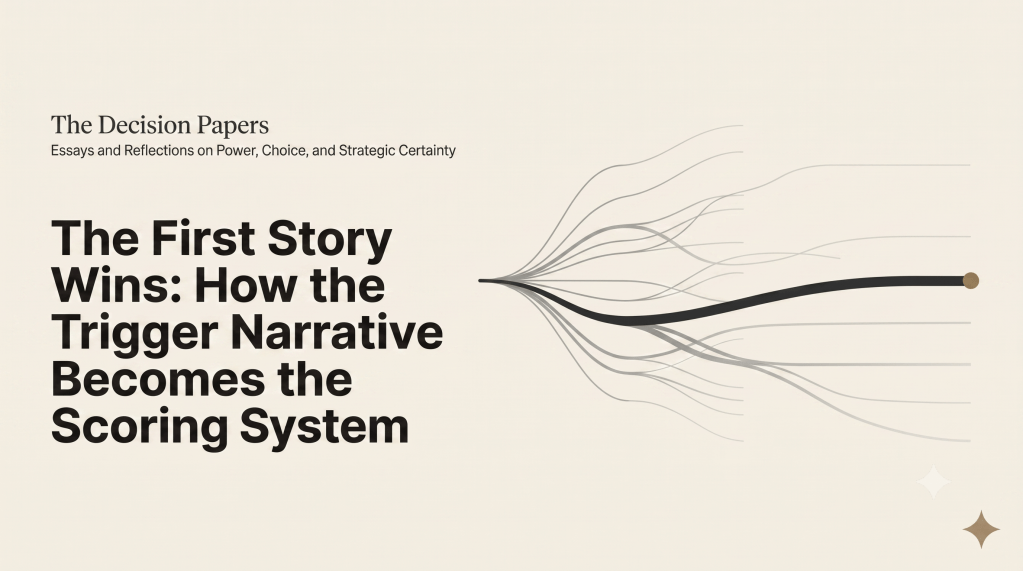
I.7 — The First Story Wins: How the Trigger Narrative Becomes the Scoring System
“We tell ourselves stories in order to live.” — Joan Didion In the first seconds after a signal claims the room’s attention, the leadership team faces an uncomfortable gap. The metric has spiked, the complaint has landed, the headline is moving, and no one yet knows what is happening on the ground, yet the pressure…
-
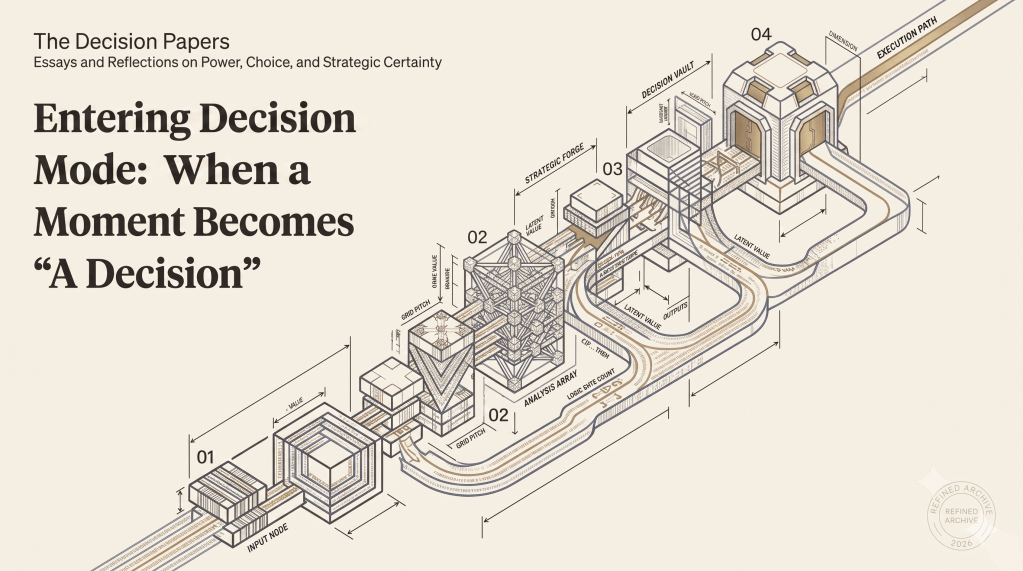
I.6 — Entering Decision Mode: When a Moment Becomes “A Decision”
“Above all, not too much zeal.” — Talleyrand Most leadership failures are not failures of strategy. They are failures of timing, the team entered decision mode too early, too late, or for the wrong reasons, and the rest unfolded from there. Organisations are not constantly making decisions, though they often feel as if they are.…
-
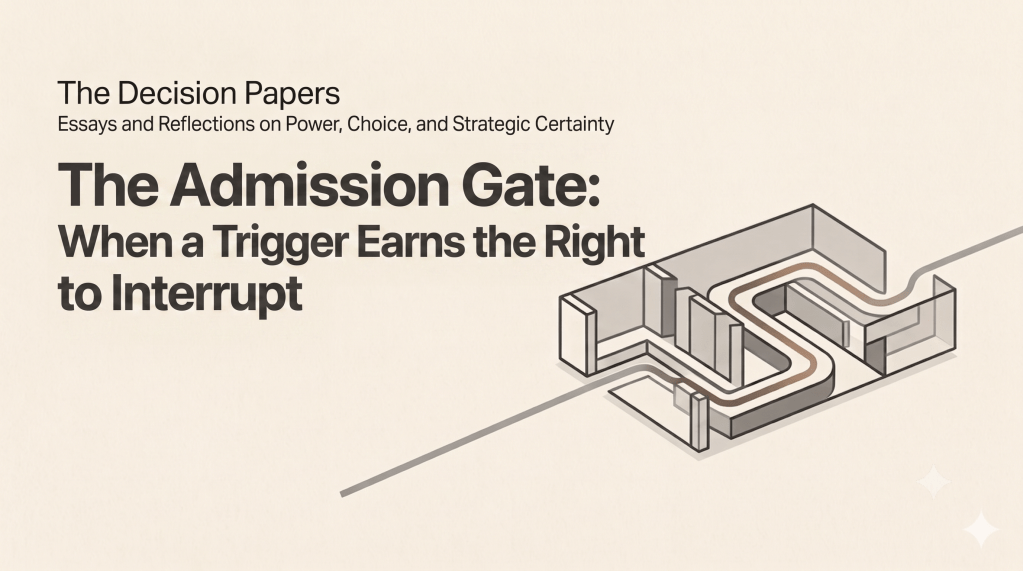
I.5 — The Admission Gate: When a Trigger Earns the Right to Interrupt
“I have made it a rule never to have my letters opened until three days after their receipt, and I find that by that time nine-tenths of the letters have answered themselves.” — Napoleon Bonaparte Most leaders think a decision begins when options appear. It begins earlier, the moment something claims the right to interrupt…
-
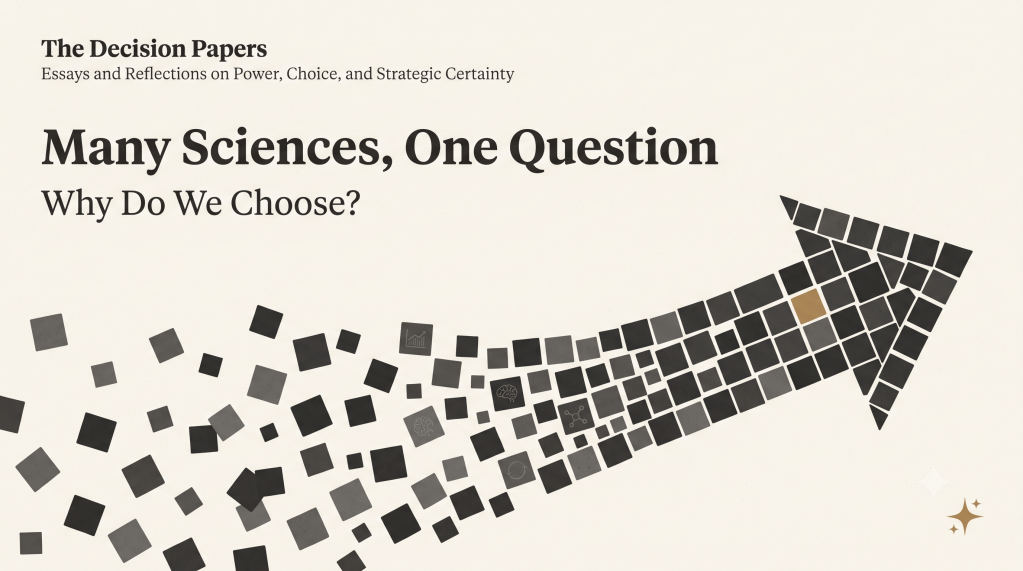
I.1 — Many Sciences, One Question: Why Do We Choose?
“I am a man; nothing human is alien to me.” — Terence, Heauton Timorumenos You remember your life in peaks. The promotion. The crisis. The betrayal. The breakthrough. But almost none of those peaks was built by a single heroic choice; they were built by a long chain of small selections, the defaults and the…