-
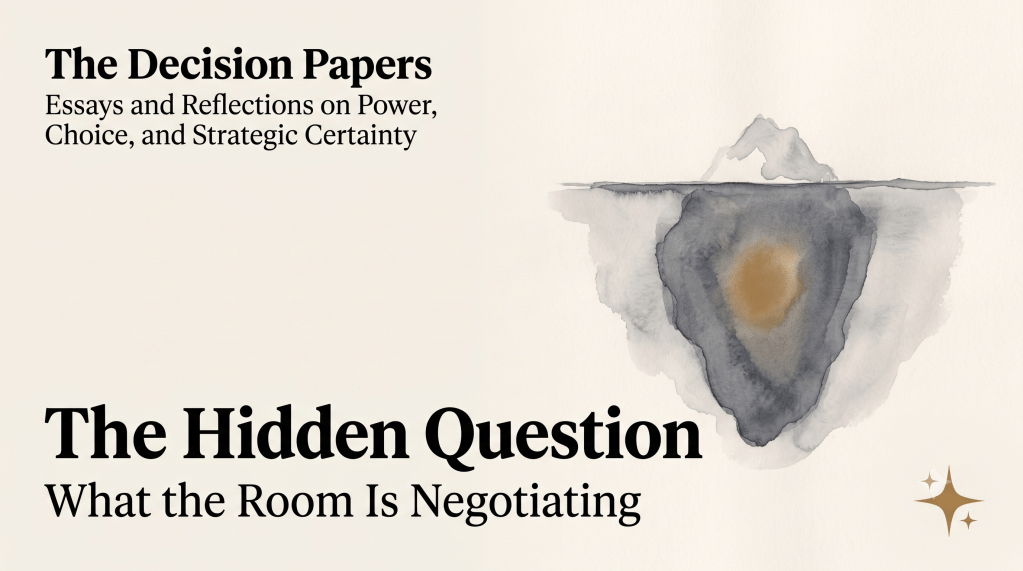
I.18 — The Hidden Question: What the Room Is Negotiating
“People are not against you; they are for themselves.” — a maxim of negotiation A room can debate for ninety minutes and never touch the thing it is negotiating. The slides are clean, the arguments intelligent, the data abundant, and nothing resolves. Not because the people are irrational, but because the question on the table…
-
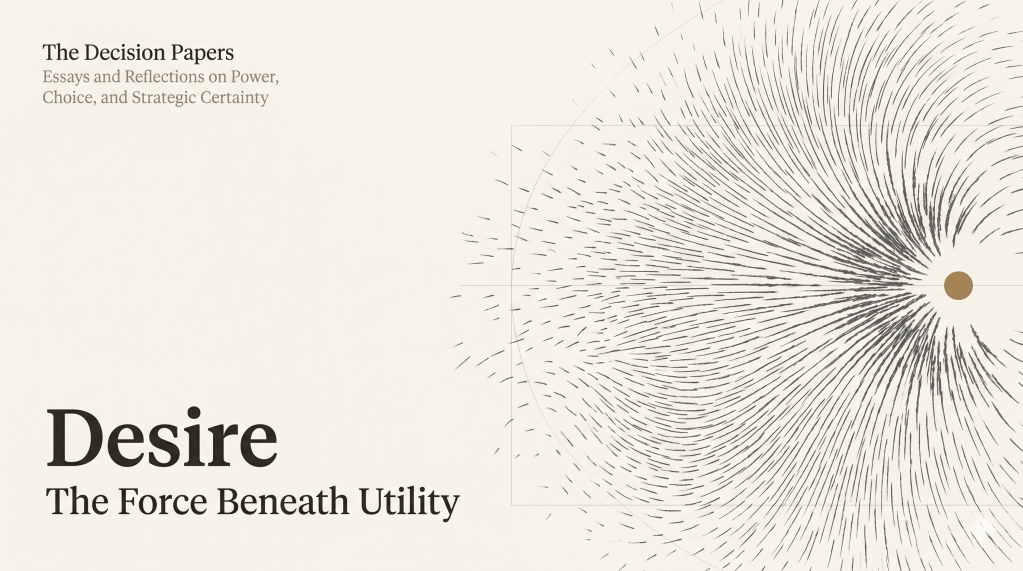
I.15 — Desire: The Force Beneath Utility
“Desire is the very essence of man.” — Baruch Spinoza, Ethics Picture a standard executive decision meeting. The table is covered in the artifacts of rationality: spreadsheets, risk matrices, projections. To an observer it looks like a laboratory, a group of neutral sensors receiving data and processing it into a logical output. To anyone who…
-
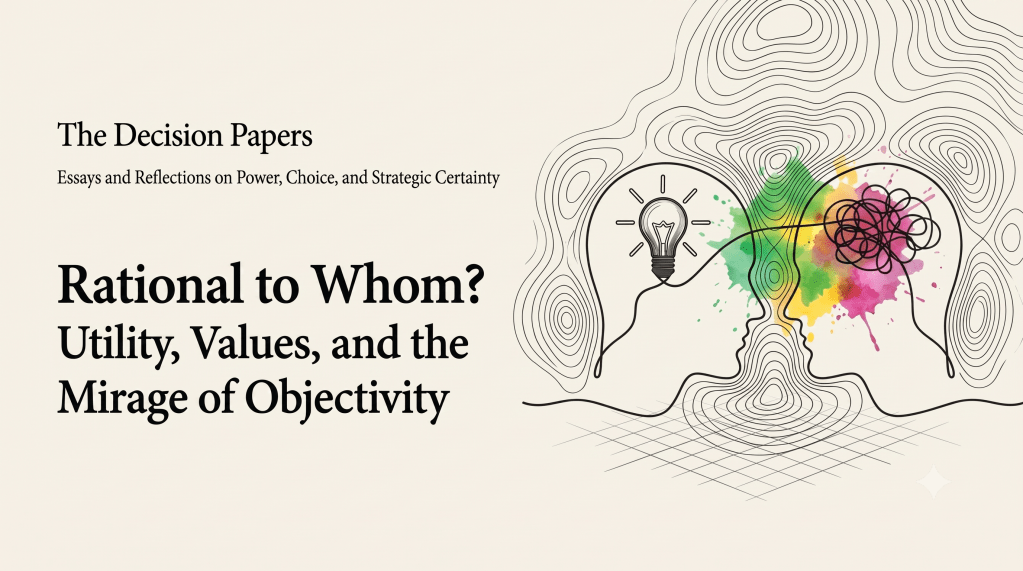
I.14 — Rational to Whom?: Utility, Values, and the Mirage of Objectivity
“There are no facts, only interpretations.” — Nietzsche In every high-stakes project there comes a moment of exasperation when a leader calls a colleague, client, or regulator “completely irrational.” The phrase offers a dangerous mix of frustration and comfort. It performs a quiet exit. By ruling the counterparty a malfunction rather than an actor with…
-
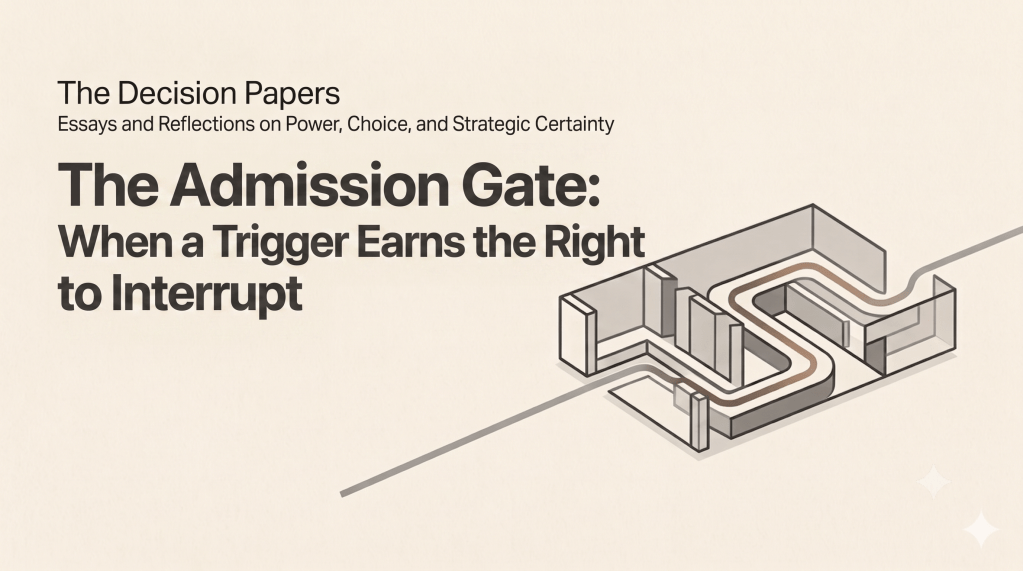
I.5 — The Admission Gate: When a Trigger Earns the Right to Interrupt
“I have made it a rule never to have my letters opened until three days after their receipt, and I find that by that time nine-tenths of the letters have answered themselves.” — Napoleon Bonaparte Most leaders think a decision begins when options appear. It begins earlier, the moment something claims the right to interrupt…
-
Subscribe
Subscribed
Have a WordPress.com account? Log in now.

