-
I.30 — Evidence Infrastructure: How Institutions Stop Falling in Love With Bad Arrows
“It is the peculiar and perpetual error of the human understanding to be more moved and excited by affirmatives than by negatives.” — Francis Bacon A room is about to approve a new initiative, and one person in the corner feels a cold flicker of recognition. We tried almost exactly this two years ago, she…
-
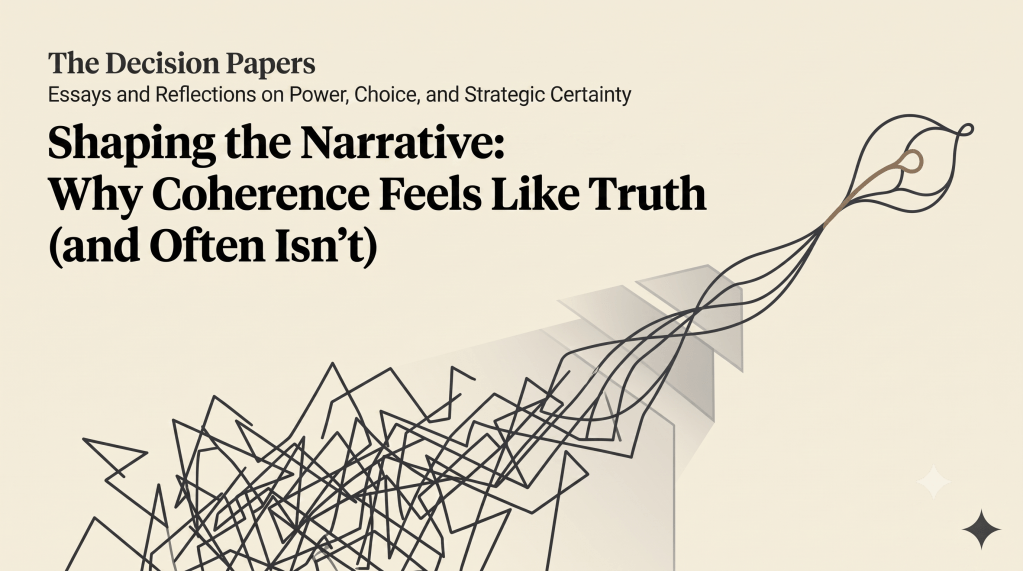
I.8 — Shaping the Narrative: Why Coherence Feels Like Truth (and Often Isn’t)
“For every complex problem there is an answer that is clear, simple, and wrong.” — H.L. Mencken A signal claiming the institution’s attention produces two pressures, and leaders rarely acknowledge the second. The first pressure is to explain what is happening. The second is to explain it in a form the room can live with,…
-
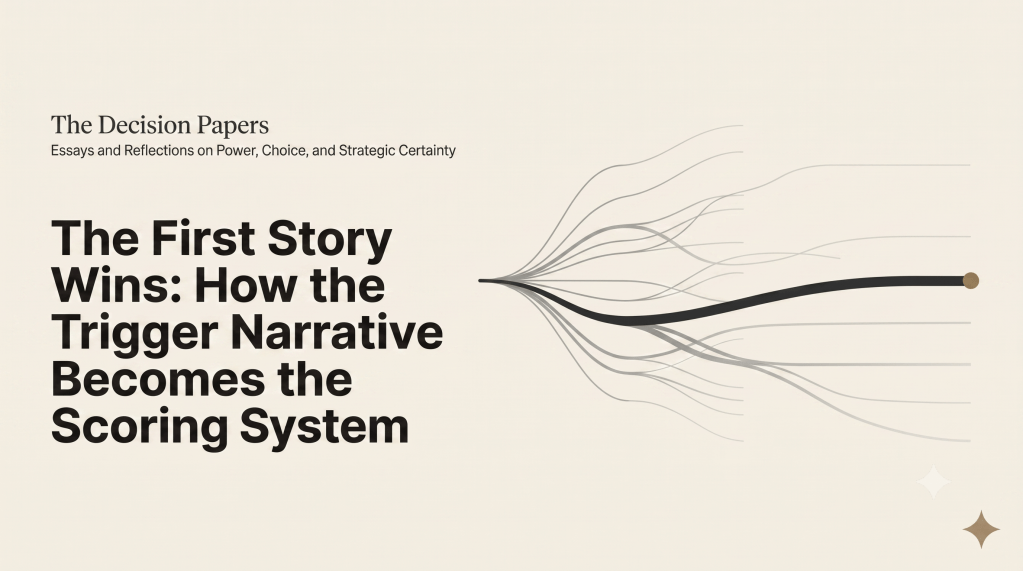
I.7 — The First Story Wins: How the Trigger Narrative Becomes the Scoring System
“We tell ourselves stories in order to live.” — Joan Didion In the first seconds after a signal claims the room’s attention, the leadership team faces an uncomfortable gap. The metric has spiked, the complaint has landed, the headline is moving, and no one yet knows what is happening on the ground, yet the pressure…
-
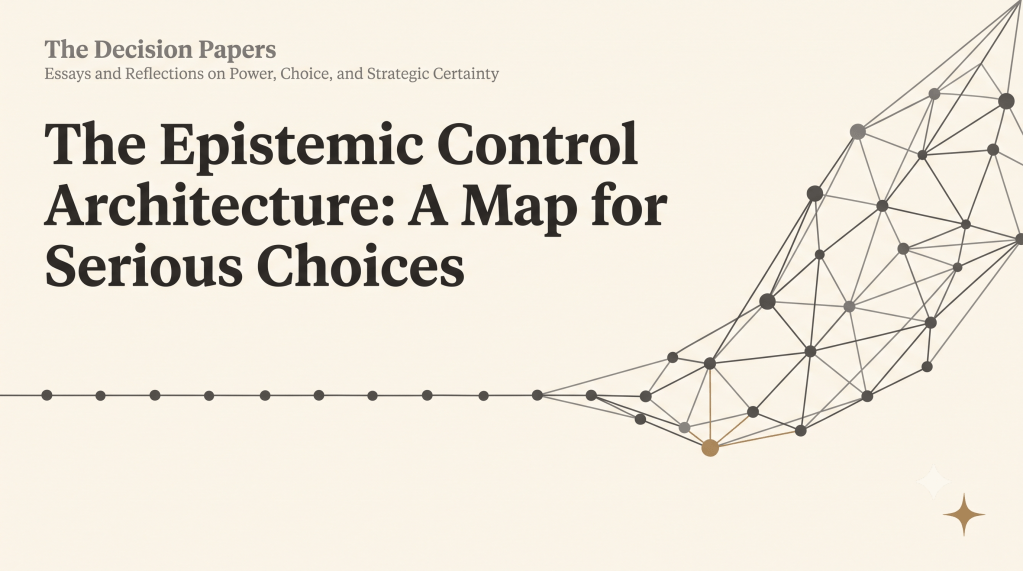
I.2 — The Epistemic Control Architecture: A Map for Serious Choices
“Nothing is stronger than habit.” — Ovid Most organisations do not fail at choosing because they lack intelligence. They fail because their knowing is disconnected from their steering. Choices move through an invisible pipeline. Who is allowed to steer. What gets escalated. What counts as proof. What is quietly forgotten. When that pipeline is implicit,…
-
Subscribe
Subscribed
Have a WordPress.com account? Log in now.

